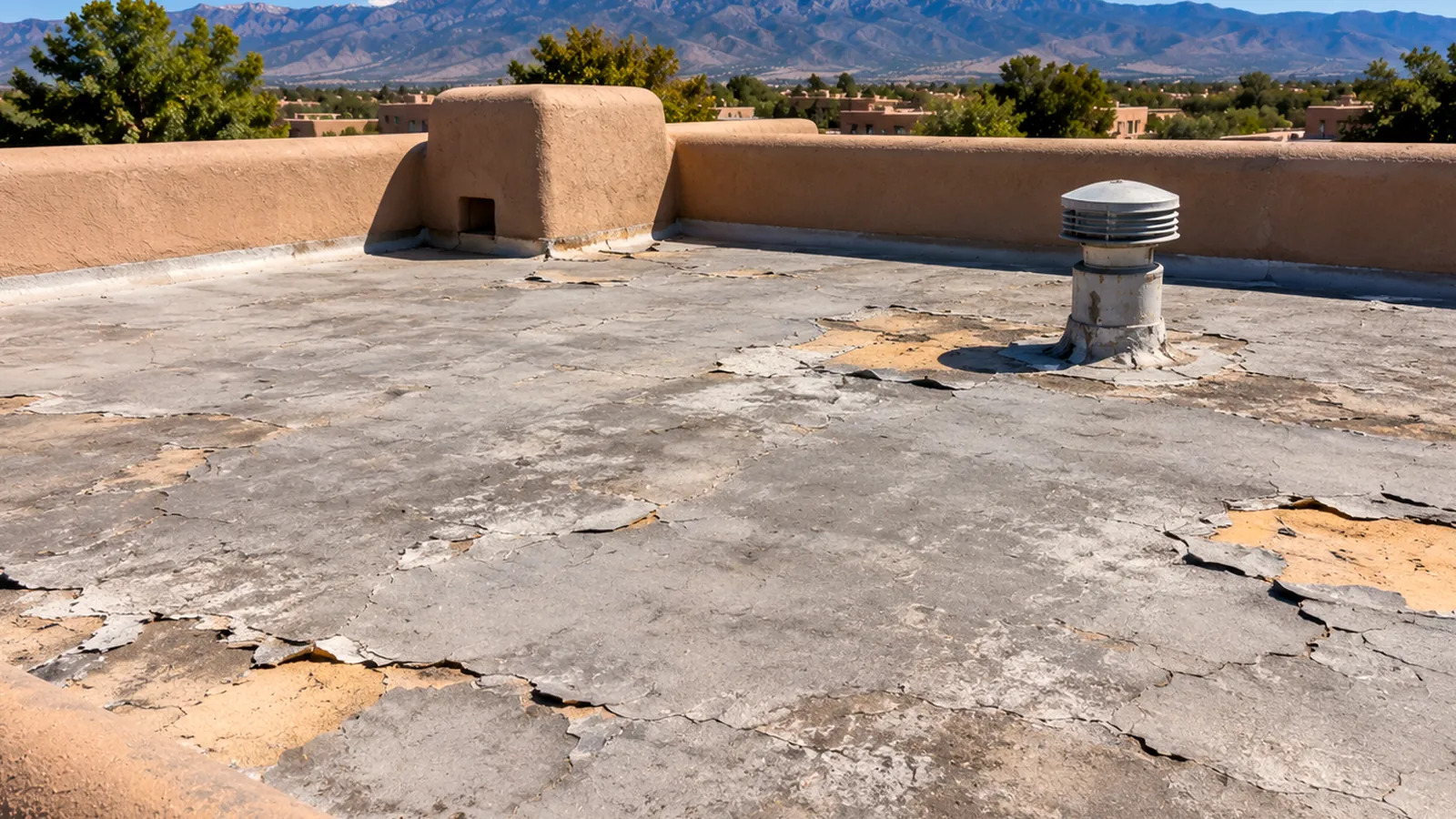
More sun, less atmosphere
At higher elevations there's less air between the sun and your roof, so ultraviolet light is stronger. Add New Mexico's many clear days and a flat roof here gets a heavy dose of UV year-round.
What UV does
- Breaks down the binders in coatings, leaving a chalky surface
- Thins the coating little by little
- Turns exposed foam yellow, then brown, then crumbly
- Dries out sealants around skylights and pipes
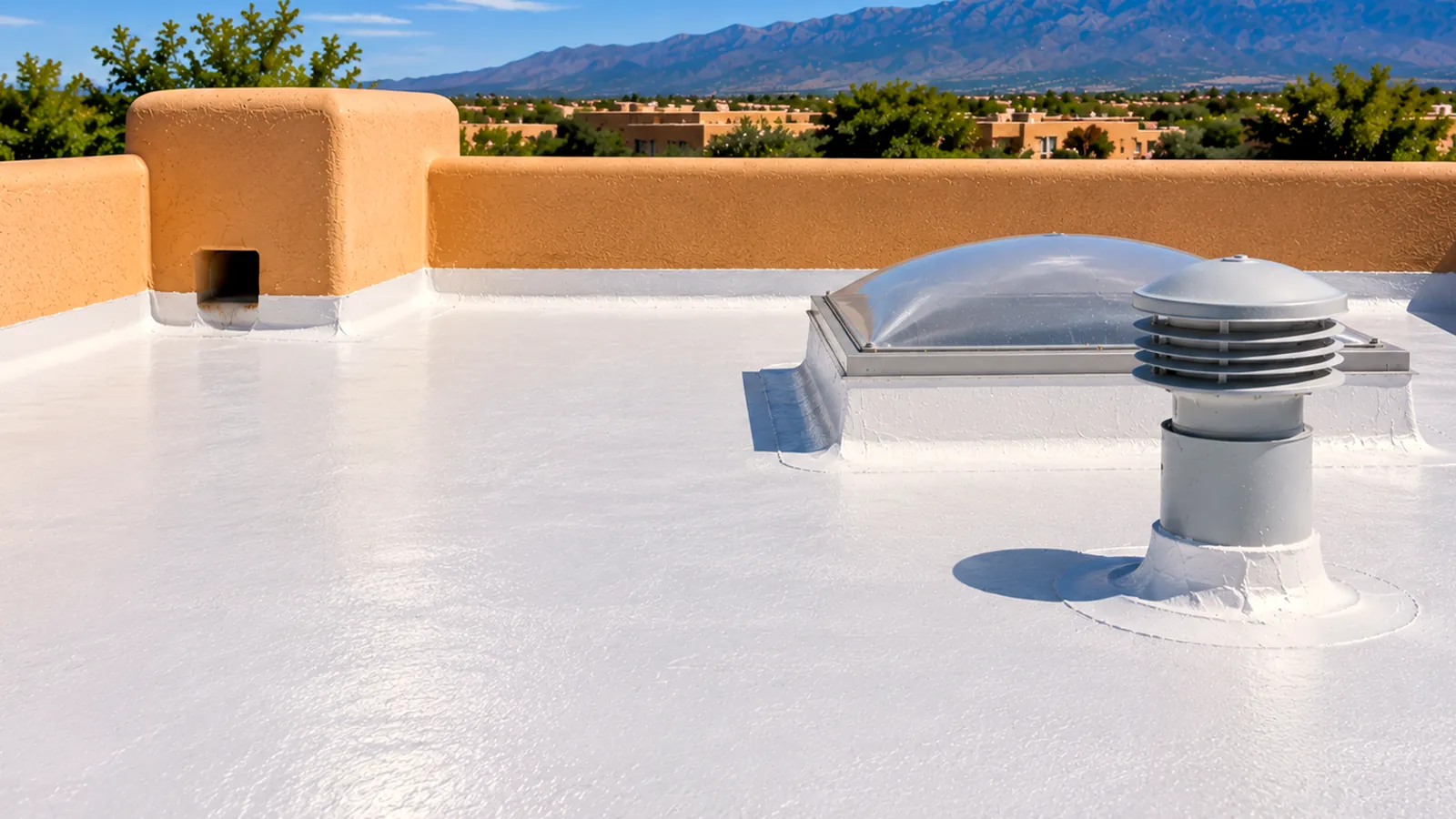
Signs of UV wear
A chalky white film on your hand, a dull or yellowed surface and fine cracking all point to UV breakdown. Exposed foam that's dark and dusty is a sign the coating is gone.
Protecting the roof
- Keep the coating at full thickness with timely recoats
- Choose coatings with strong UV resistance
- Recoat the sunniest areas, usually south and west, with extra care
- Check sealants around openings every year or two
The upside
A bright white coating reflects much of that sunlight, keeping the roof and the rooms below cooler. See elastomeric coating.
Call (505) 588-5928 for a roof check.
Common questions
Does UV damage show from the ground?
Rarely. You usually have to get on the roof or look at photos.
Is silicone better for UV?
Silicone has excellent UV resistance. Good acrylics hold up well too when applied thick enough.