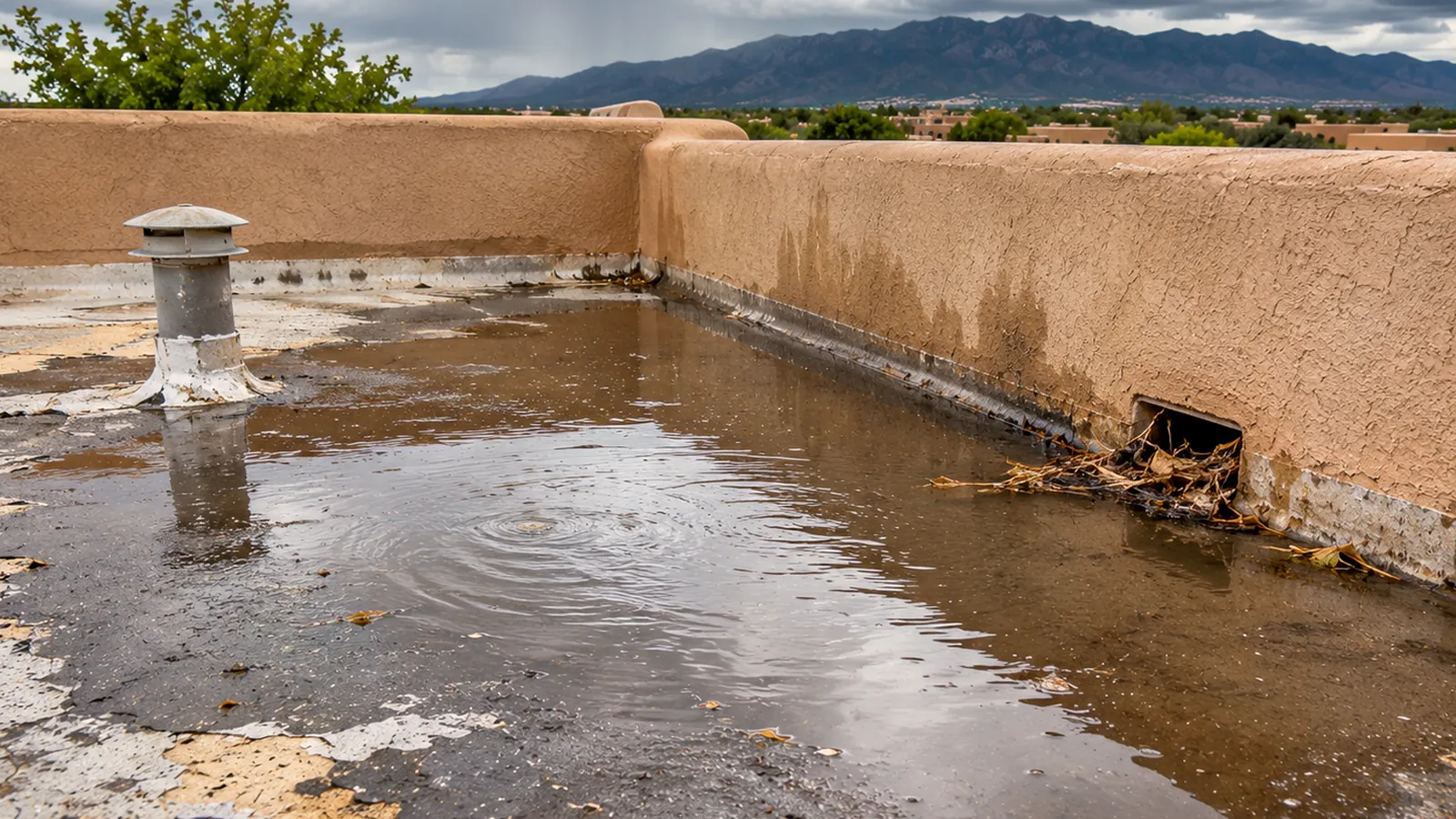
Where water gets in
- Parapet caps — cracks on top let water into the wall
- Roof-to-wall corners — the joint separates with movement
- Canales — cracked, clogged or loose at the wall
- Skylights and clerestories — dried sealant and cracked domes
- Pipes, flues and wood stove chimneys — open flashing
- Solar mounts — feet that were never properly sealed
- Low spots — water and snowmelt wear the coat through
Leaks after snow
Some Placitas leaks only show up after snow. Snow piles against parapets, melts during the day and refreezes at night. Water works into cracks, freezes, and opens them wider. If your leak appears days after a storm, that's often the cause. See snow and freeze-thaw.
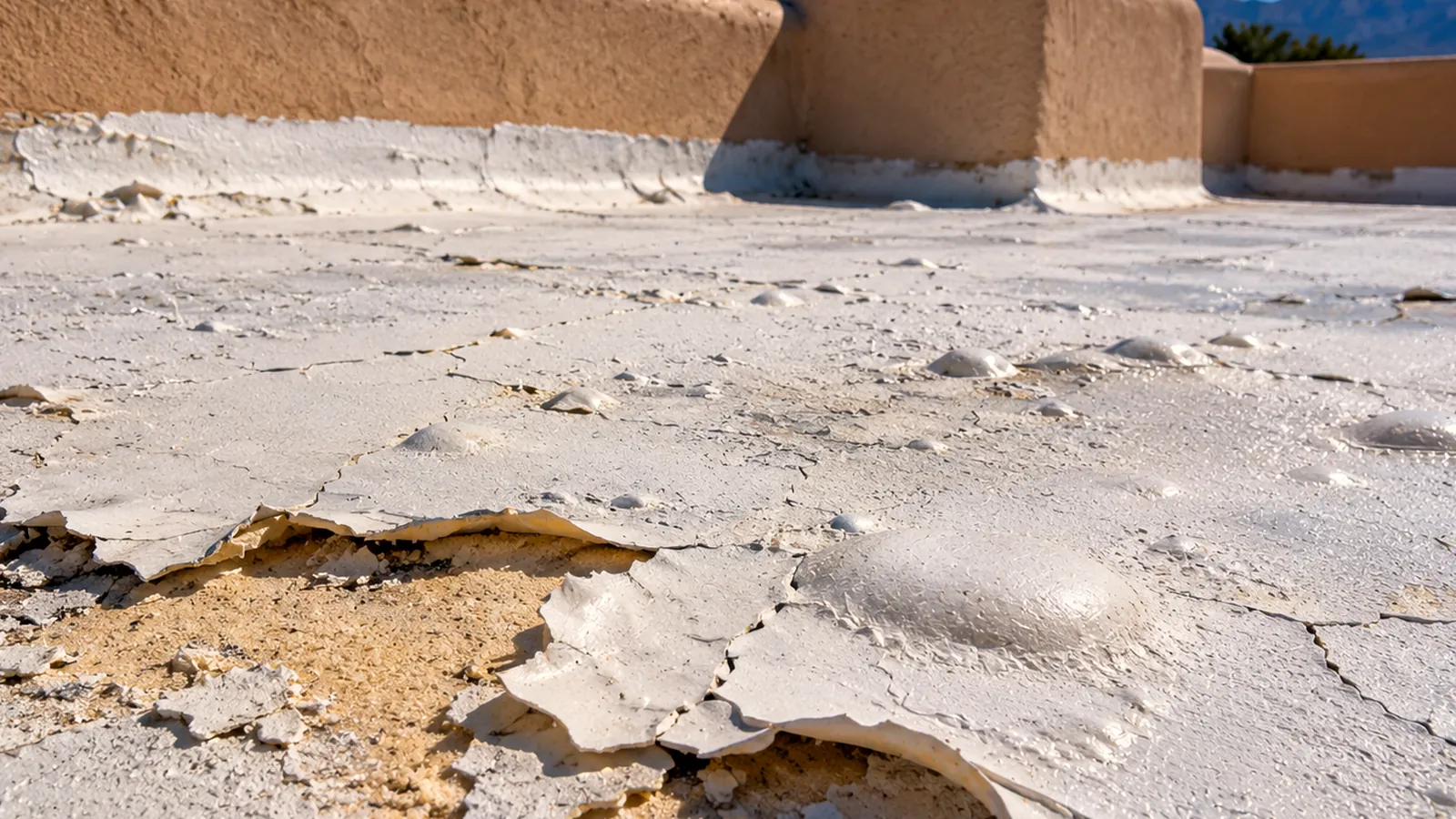
How we track it down
We start with when and where you see water inside, then work across the roof: probing foam for wet spots, checking caps, corners and every opening, and water-testing sections when needed.
The repair
- Remove wet or damaged foam and let the area dry
- Replace foam and rebuild slope if water was sitting
- Reinforce cracks and joints with fabric and coating
- Reseal or replace failed canales and flashings
- Coat the repair so it's protected from the sun
If the whole coating is worn, we'll tell you that a spot repair may not hold for long. See foam roof recoating.
Leaking now? Call (505) 588-5928. Photos of the stain and notes on when it drips help us find it.
Common questions
Can you fix a leak in winter?
Many repairs can be done on a dry, mild day. A full recoat may need to wait for warmer weather.
Why did my leak come back after someone patched it?
Often because the patch went over wet foam, or the real entry point was somewhere else.
Do you handle insurance claims?
We provide photos and estimates. Your insurer decides coverage.