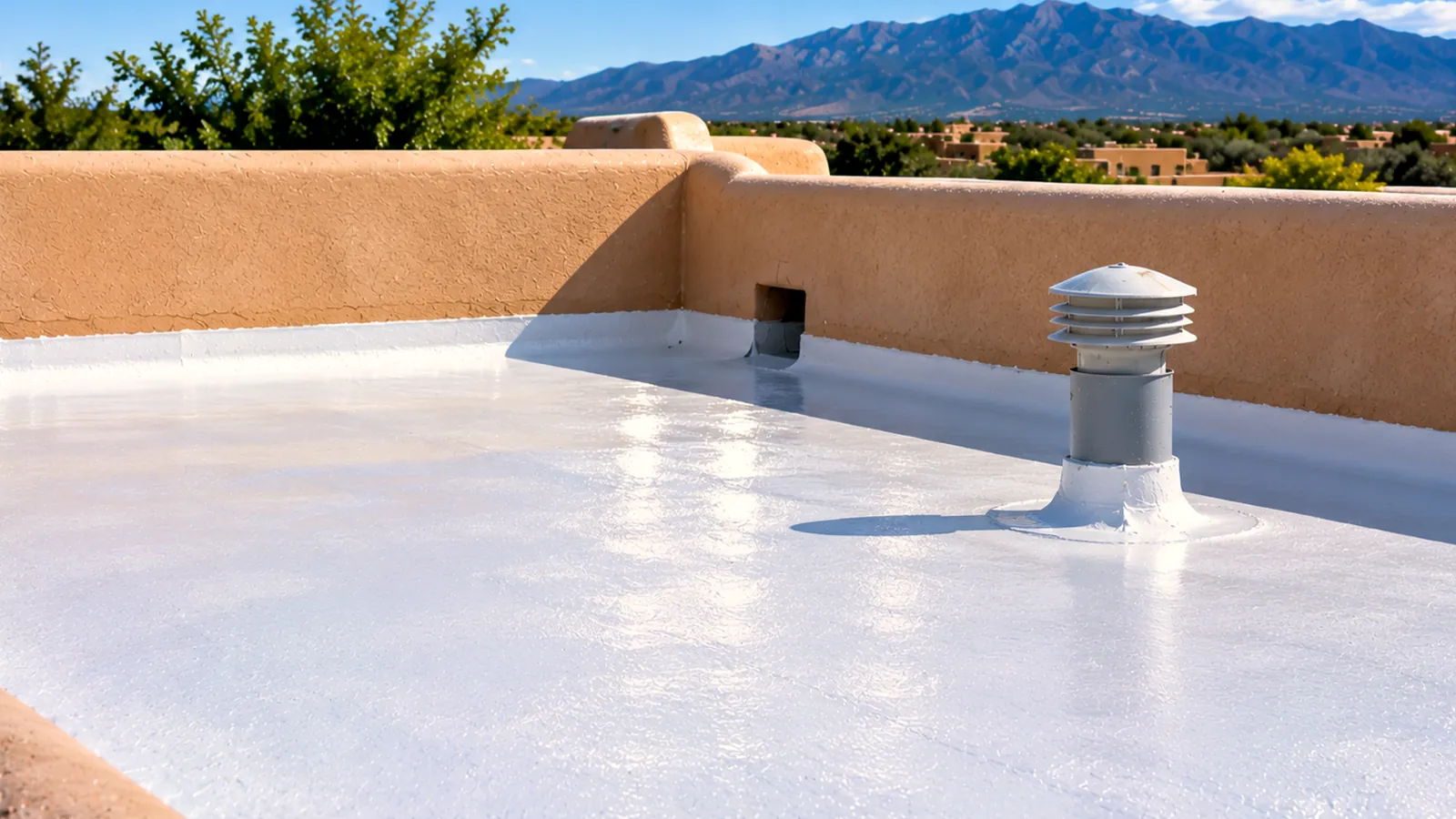
Where silicone wins
Silicone keeps working where water stands — near canales, in corners where snow drifts, or on a low addition where the slope runs the wrong way. It also holds up very well to the strong ultraviolet light at Placitas elevation.
Trade-offs
Higher cost
Silicone material costs more than acrylic, so the job does too.
Silicone stays silicone
Few products bond to it except silicone, so future recoats will be silicone.
Holds dust
It can pick up dirt and pollen and look less bright over time.
Slick when wet
Walk carefully on a silicone roof after rain or frost.
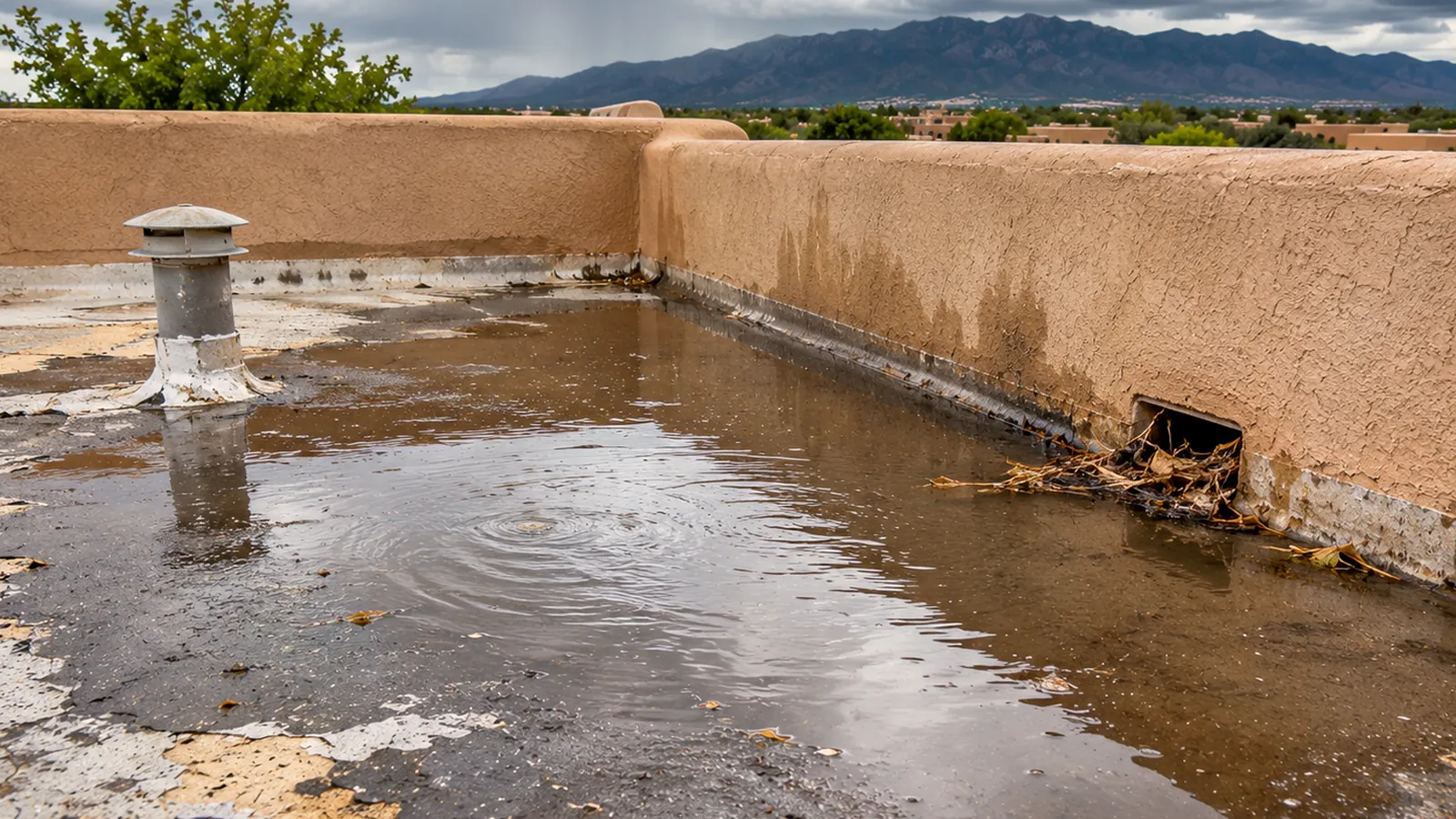
Silicone or a slope fix?
If water sits in one or two places, building those spots up with foam and staying with acrylic may cost less over time. If the roof is flat by design, silicone may be the more practical answer. We'll show you where water collects and price it both ways. See choosing a coating.
Snow and silicone
On roofs where snow drifts against north-facing parapets and melts slowly, silicone in those areas can help. Whatever coating you choose, canales need to stay clear so meltwater has somewhere to go. See snow and freeze-thaw.
Notice water or slush hanging around on the roof? Call (505) 588-5928.
Common questions
Is silicone better than acrylic?
It handles standing water better. On roofs that drain, acrylic is often the better value.
Can silicone go over my acrylic roof?
Yes, with cleaning and sometimes a primer.
How long does silicone last?
Often as long as or longer than acrylic, especially on ponding roofs, when applied at the right thickness.