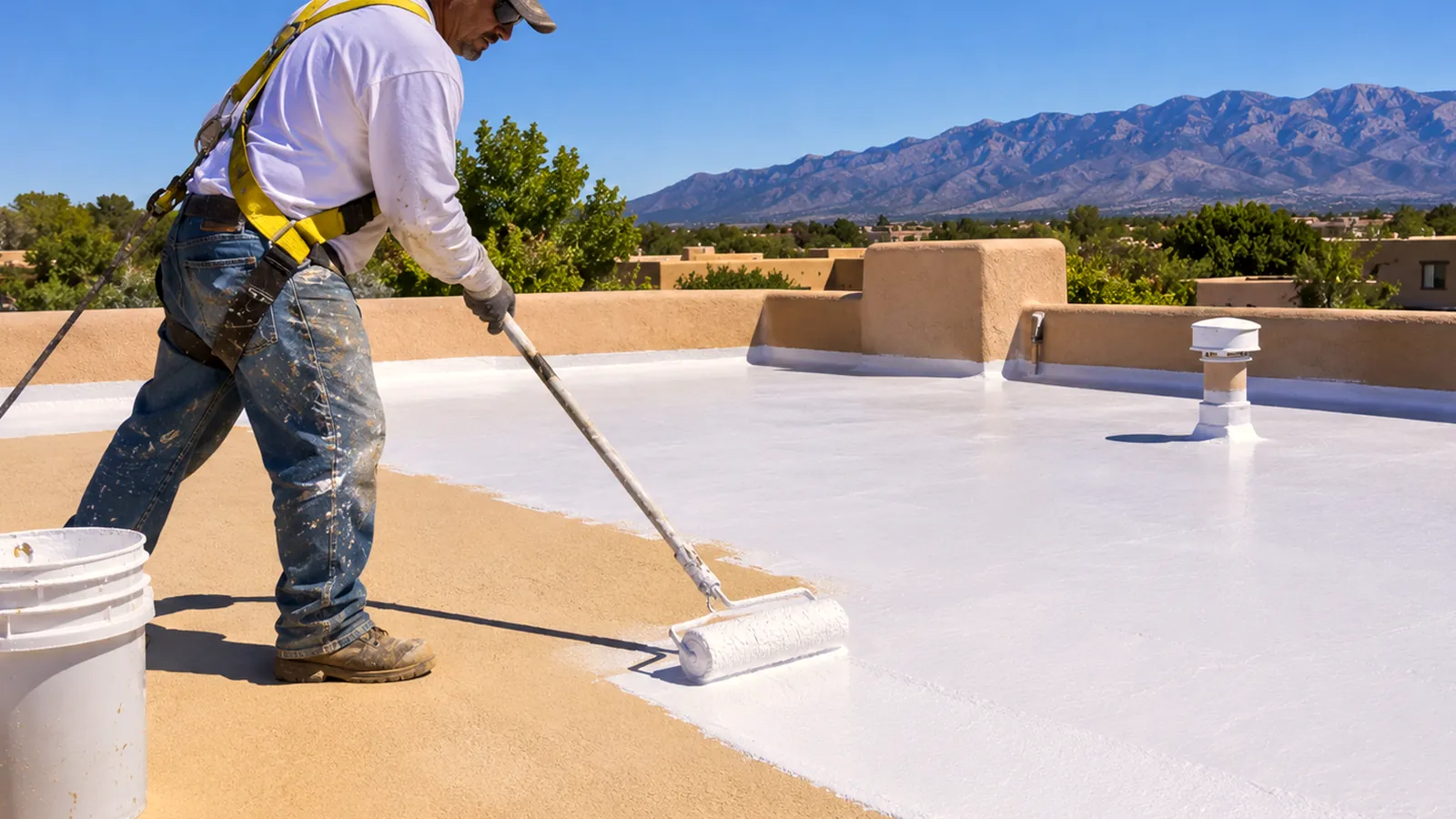
Built to move
Roofs expand in heat and shrink in cold. A stiff coating cracks under that cycle; an elastomeric one stretches. Most elastomeric roof coatings are acrylic, water-based and bright white. They bond well to foam and to most older coatings, and they're the usual choice for recoating a Placitas flat roof that drains properly.
Good fits
- Foam roofs with steady slope to the canales
- Roofs already coated with acrylic
- Owners who want strong reflectivity for the price
- Casitas, studios and garages tied to the main house
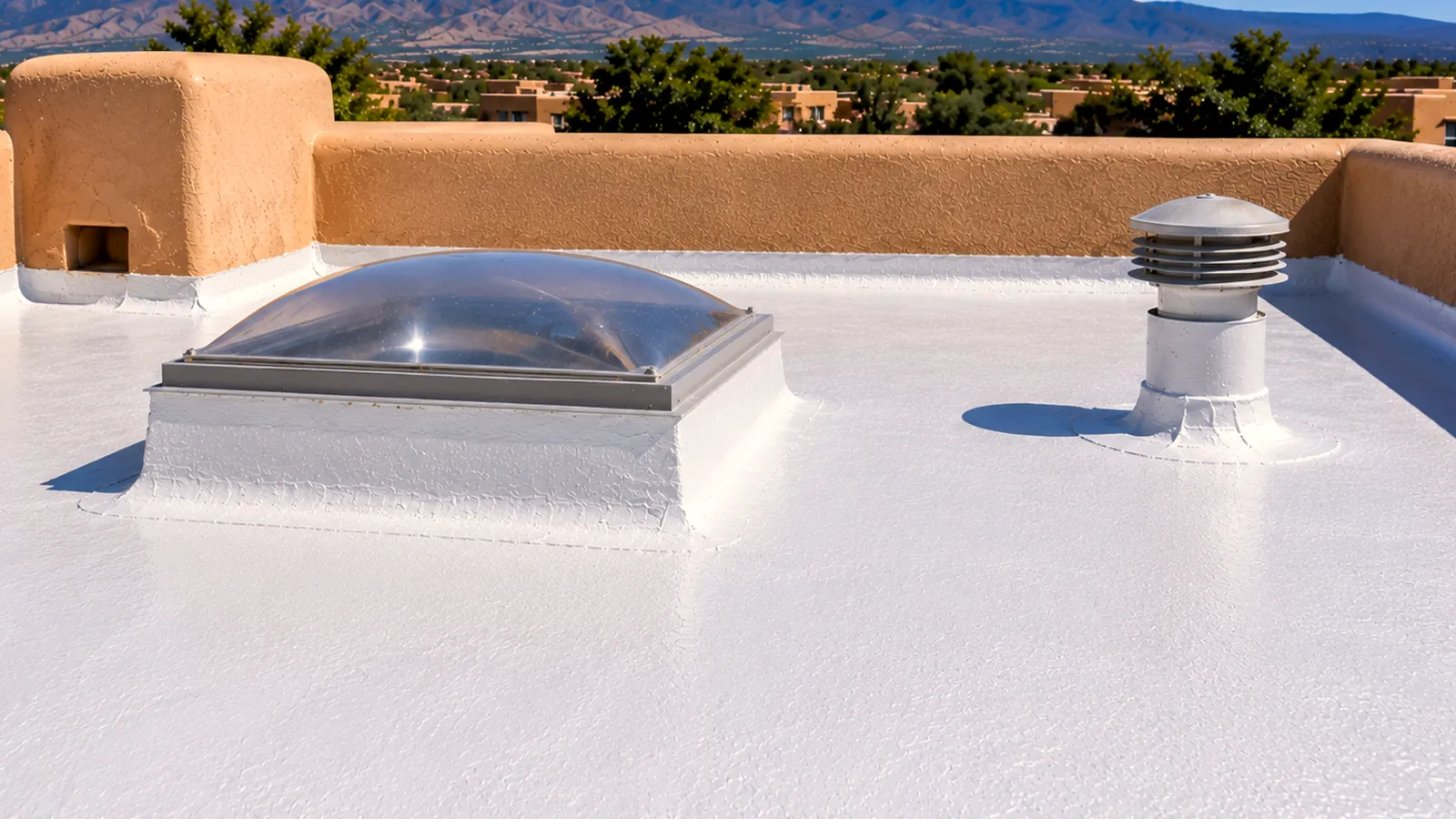
Limits
Acrylic doesn't like water that sits on it for days. Snow that melts slowly behind a north parapet, or a low spot that holds rain, will wear acrylic faster. Those areas can be built up with foam, or the roof can go to silicone. Acrylic also needs warm, dry weather to cure, so it's a spring-through-fall product here.
Ask about thickness
Every elastomeric product has a recommended dry film thickness. The roof only gets that protection if the right amount goes on. A good estimate lists the product and the coverage rate. If a bid doesn't say, ask.
| Elastomeric acrylic at a glance | |
|---|---|
| Typical color | White |
| Best on | Roofs without standing water |
| Application season | Late spring to early fall |
| Next recoat | Often 6–10 years |
Not sure your roof drains well enough? Call (505) 588-5928.
Common questions
Is elastomeric the same as acrylic?
Most elastomeric roof coatings are acrylic, but silicone and urethane coatings can be elastomeric too.
Will it stay white?
It stays much brighter than an old weathered coat, especially if the roof is washed now and then.
Can it be applied in winter?
Usually not. It needs warmth to cure. Repairs can sometimes be done on mild winter days.