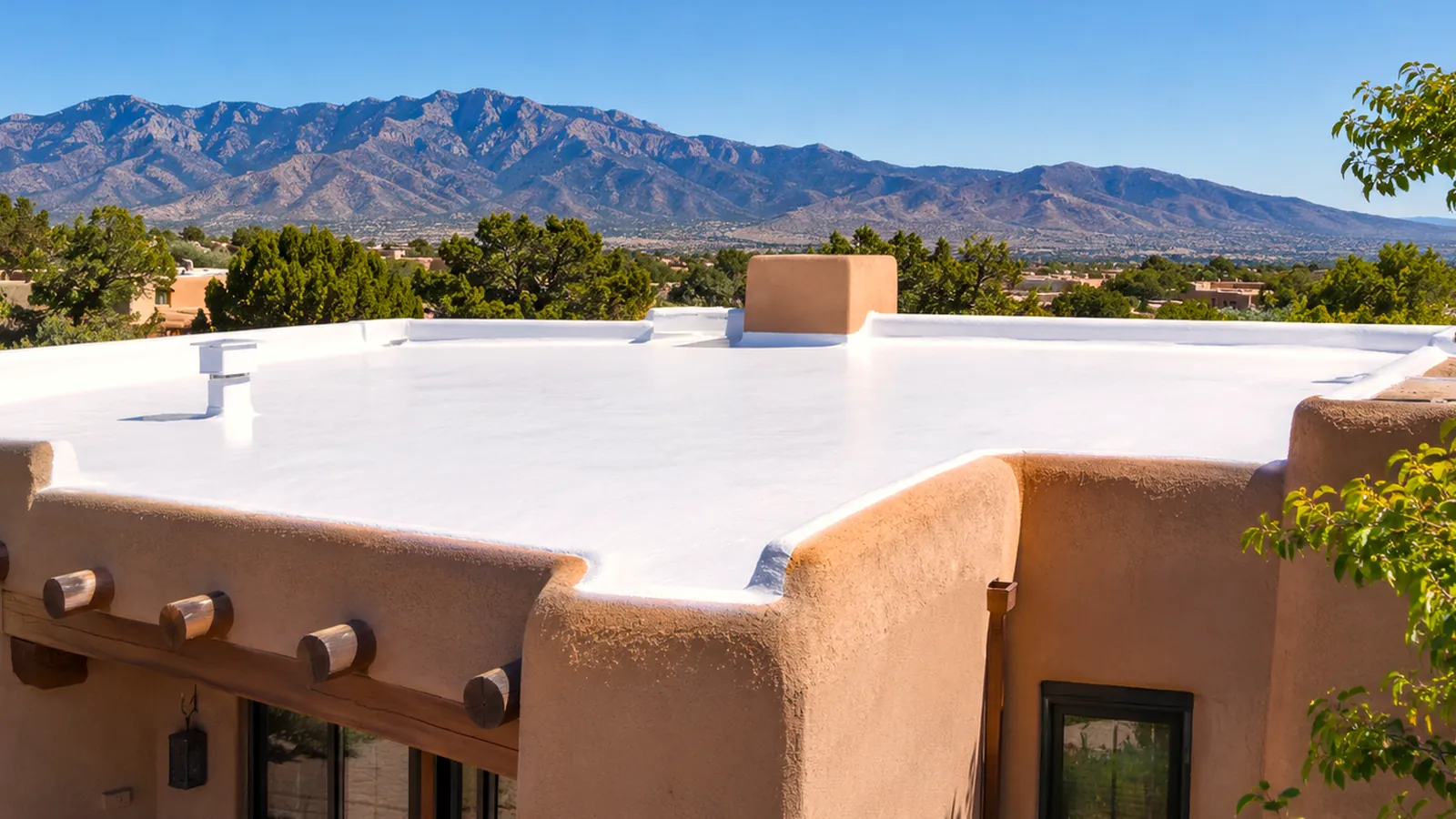
Why parapets fail
Parapets are the walls that rise above a flat roof. On Placitas homes they're often rounded, hand-shaped and finished in stucco or mud plaster. That top surface faces the sky, so it cracks from sun, freezes and thaws in winter, and lets in water during storms. Where the roof meets the inside face of the wall, the joint moves every day as the house heats and cools.
Warning signs
- Hairline or open cracks along the top of the wall
- Stucco that sounds hollow or is coming loose
- Stains or efflorescence (white crust) on the outside of the wall
- Damp spots or bubbling paint high on an inside wall
- A gap where the roof coating meets the parapet
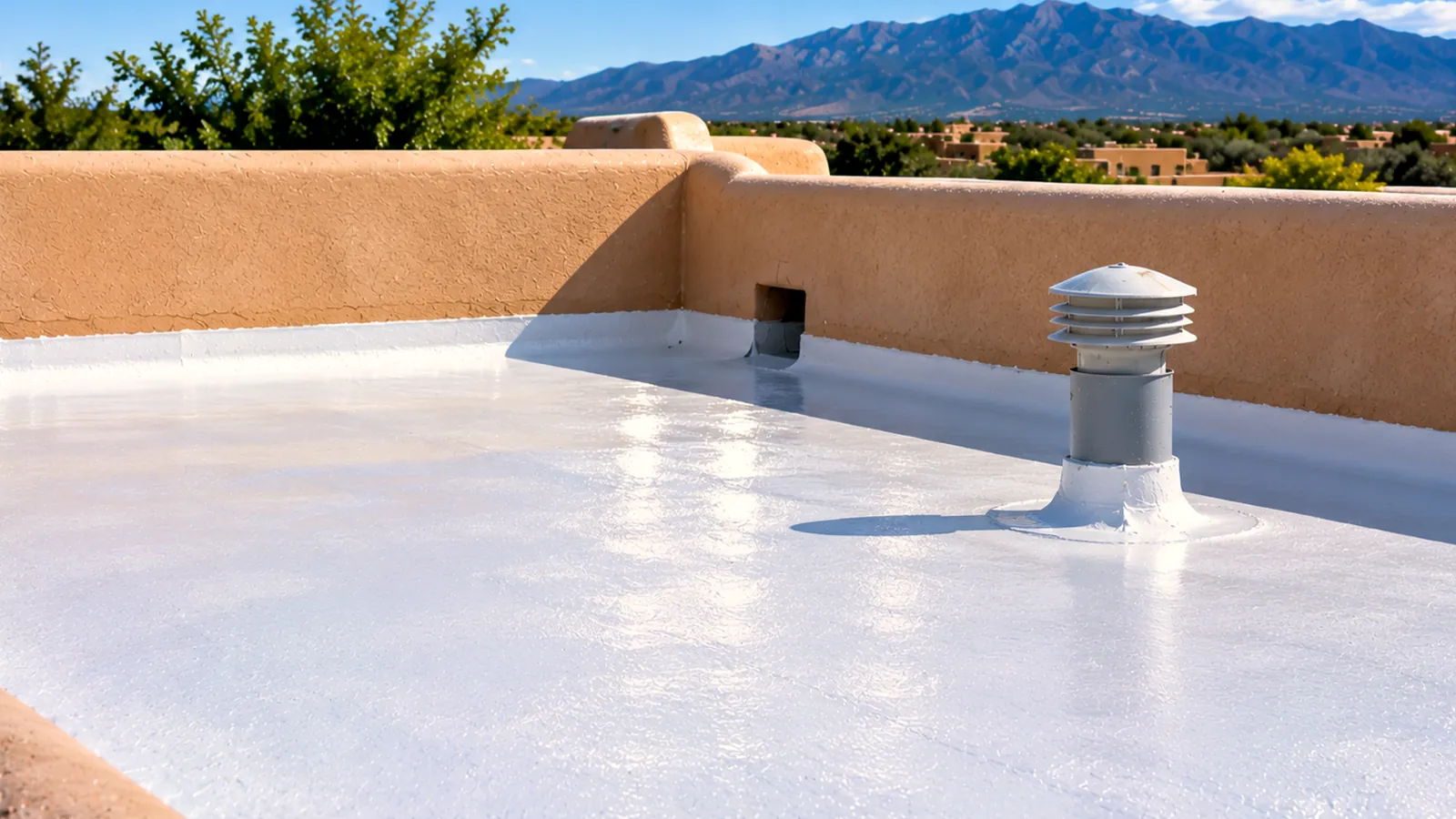
Our approach
- Clean the cap and inside face and remove loose material
- Fill cracks with a compatible patch
- Embed polyester fabric in coating at corners and cracks
- Coat the inside face and, where suitable, over the top of the cap
- Check canales and scuppers that pass through the wall
Adobe walls need care
Real adobe needs to stay dry. Water that gets into the top of an adobe wall can soften it from the inside. Sealing the cap is one of the most important things you can do for an adobe home. See keeping adobe walls dry.
Metal coping
On walls that keep cracking, a metal cap over the parapet can be a long-term fix. Ask about it at your estimate.
See stains under a canale or on an inside wall? Call (505) 588-5928.
Common questions
Do you do exterior stucco?
We seal and coat the tops and roof-side faces of parapets. Full exterior stucco or plaster is a separate trade.
Is coating safe on real adobe?
Breathability matters on adobe. We'll talk through product choices for your walls.
Should parapets be checked every year?
A quick look each spring is a good idea, especially after a snowy winter.